
SHOWCASES
Vilnius "Vilties" School reconstruction
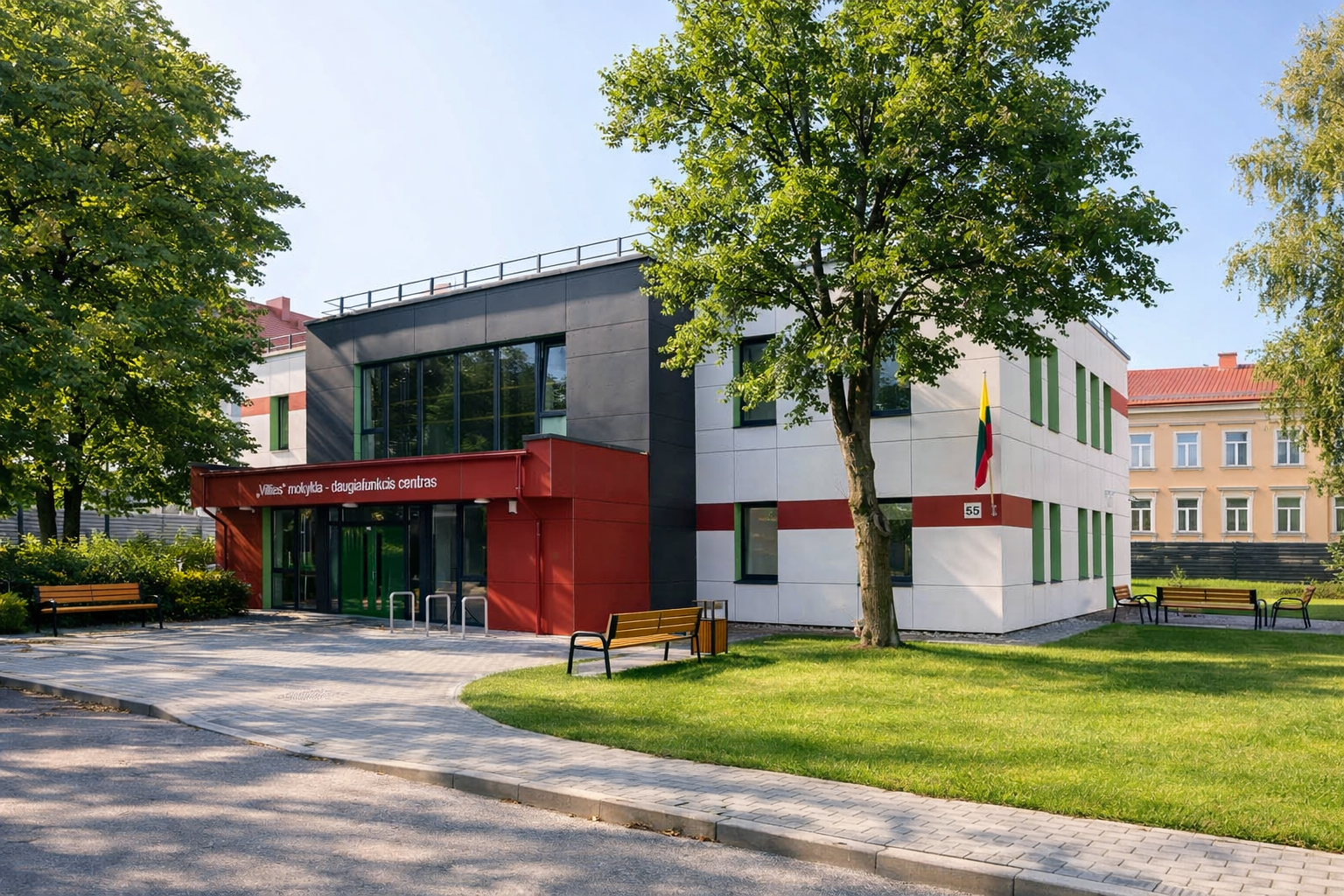
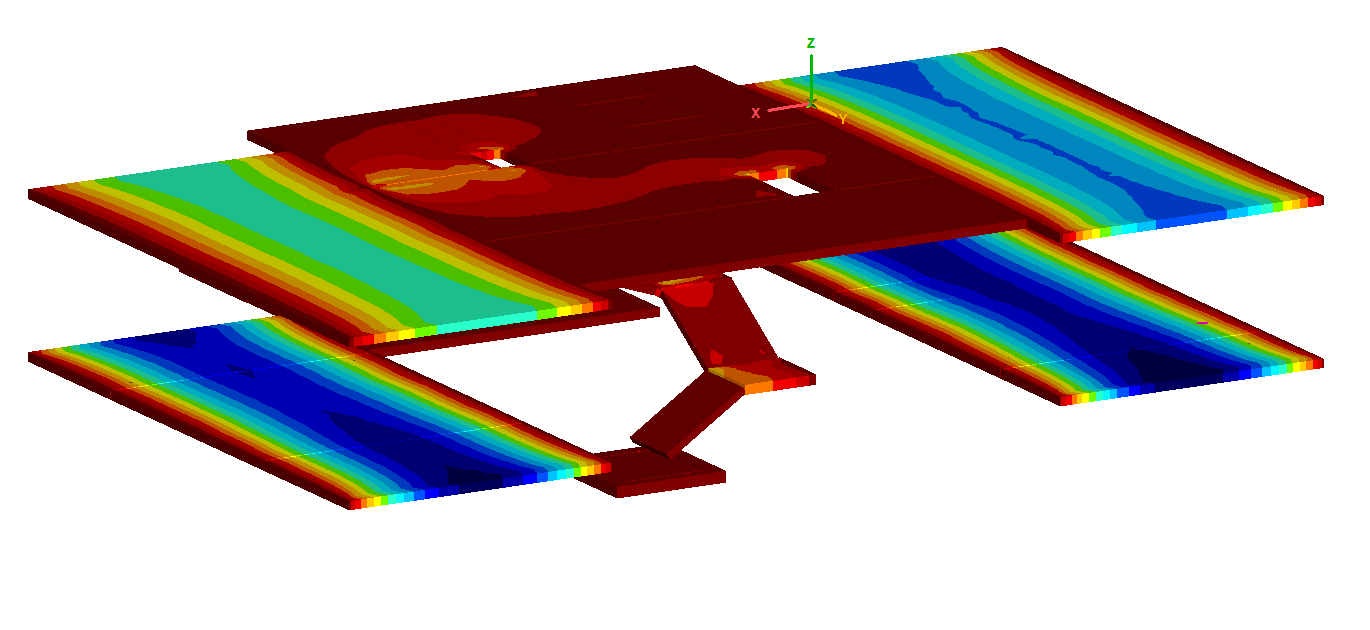
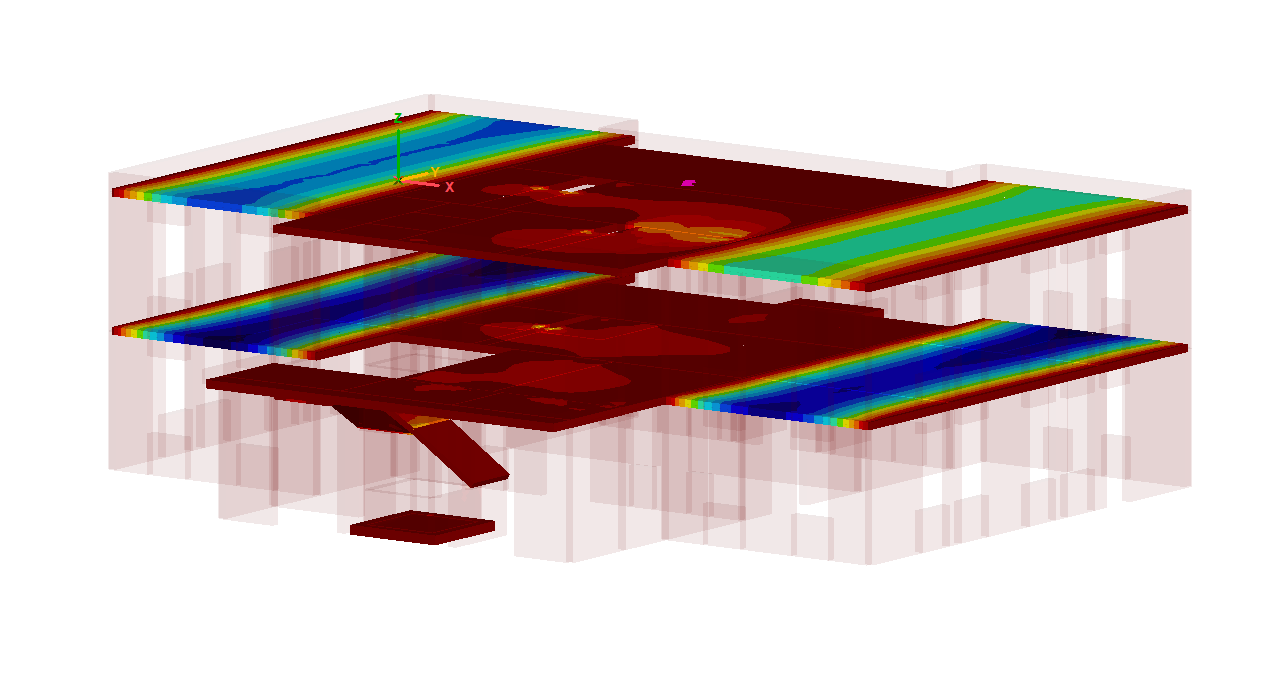
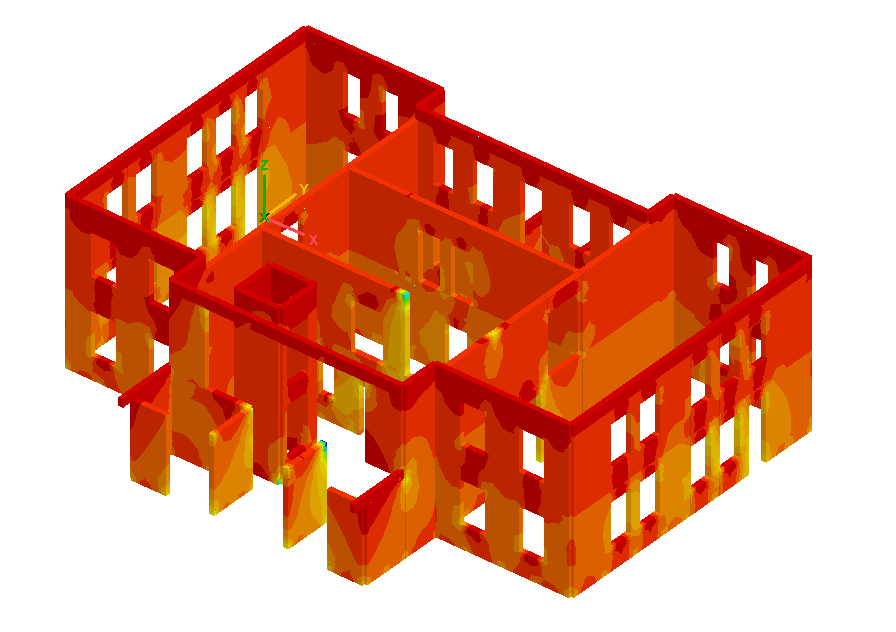
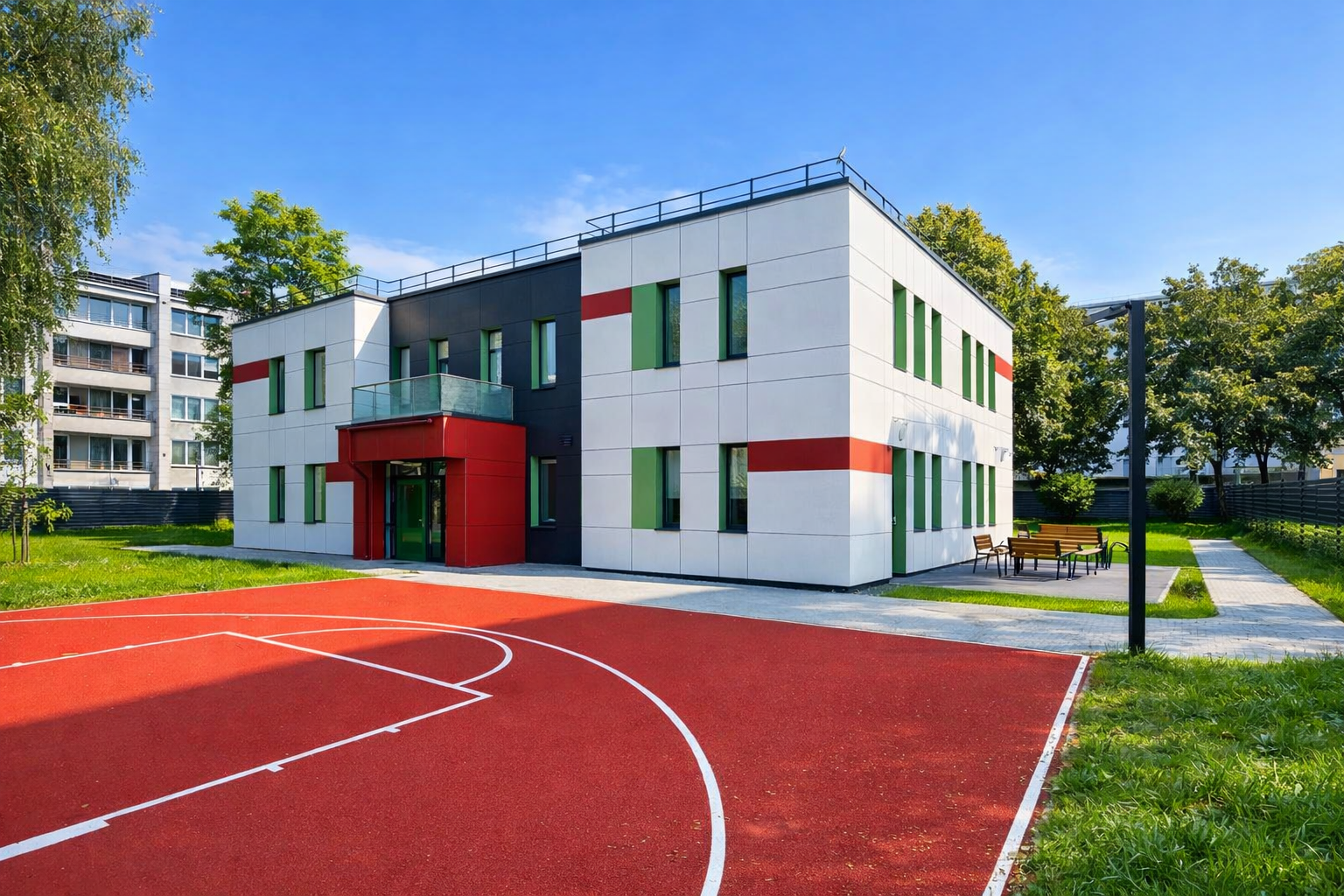
 VILNIUS, LITHUANIA
Static design: UAB Structures, Mindaugas Petkevičius
Year of construction: 2023
Source of photos: UAB Structures
PROJECT DESCRIPTION
Vilnius “Vilties” School Reconstruction
Delivering Reliable Structural Design with AXISVM
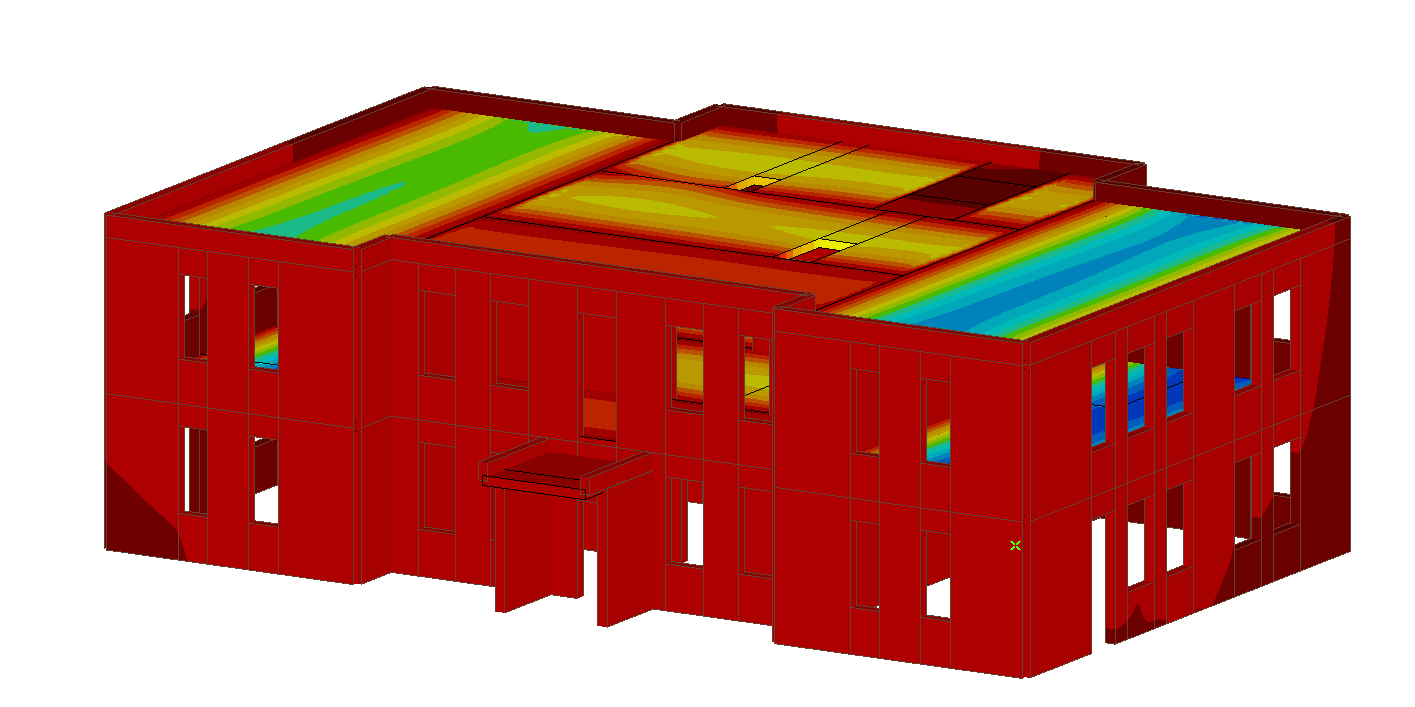
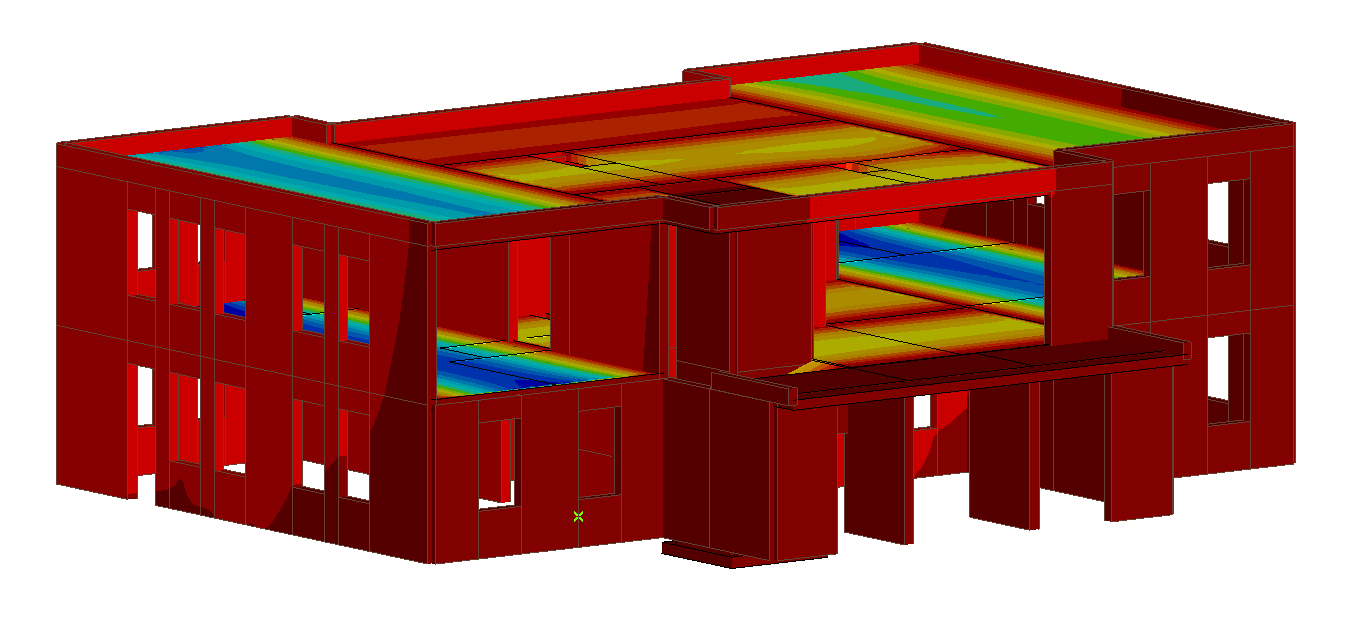
The reconstruction of the Vilnius “Vilties” School required a thorough assessment of the existing structure alongside the design and verification of strengthening solutions. For UAB Structures, AXISVM served as the primary structural analysis and design platform, providing an integrated environment for modelling, analysis, verification, and structural design throughout the project.
Project Overview
The reconstruction of Vilnius “Vilties” School was carried out using established engineering principles and standard structural solutions. The primary focus for the engineering team was the accurate assessment of the existing load-bearing system and the development of optimised structural solutions for the reconstruction.
A key objective of the project was to ensure that the reconstructed building fully complied with mechanical resistance and stability requirements while providing a safe, reliable, and efficient structure for the school’s future use.
AXISVM Throughout the Engineering Process
For UAB Structures, AXISVM was the central tool used for structural modelling, analysis, and design.
The software enabled comprehensive evaluation of the building’s structural system, accurate modelling of existing and new structural elements, efficient assessment of load effects, and verification of structural performance under various design scenarios. Its integrated workflow allowed the engineering team to optimise structural solutions while ensuring the reliability and safety of the reconstructed building.
One of AXISVM’s greatest advantages during the reconstruction was its ability to assess the existing structural condition and support the development of technically justified strengthening solutions. The software made it possible to evaluate degradation effects, analyse the structure under updated loading conditions, and verify both modified and newly introduced structural members.
By integrating analysis, verification, and design within a single environment, AXISVM supported consistent engineering decisions throughout the reconstruction process, particularly in areas where the original structure exhibited reduced stiffness, insufficient capacity, or irregular support conditions. This enabled the team to identify critical structural weaknesses and develop reliable, code-compliant interventions tailored to the building’s actual behaviour.
Features That Streamlined the Project
According to UAB Structures, AXISVM offered a range of features that significantly improved engineering efficiency throughout the project.
The software provides fast and intuitive creation of finite element models, while material assignment is both flexible and efficient. Defining equilibrium conditions is straightforward, offering engineers a clear and well-structured workflow.
The built-in tools for generating wind, snow, soil pressure, and other environmental loads proved particularly valuable, while the intuitive meshing process allowed precise control over model discretisation.
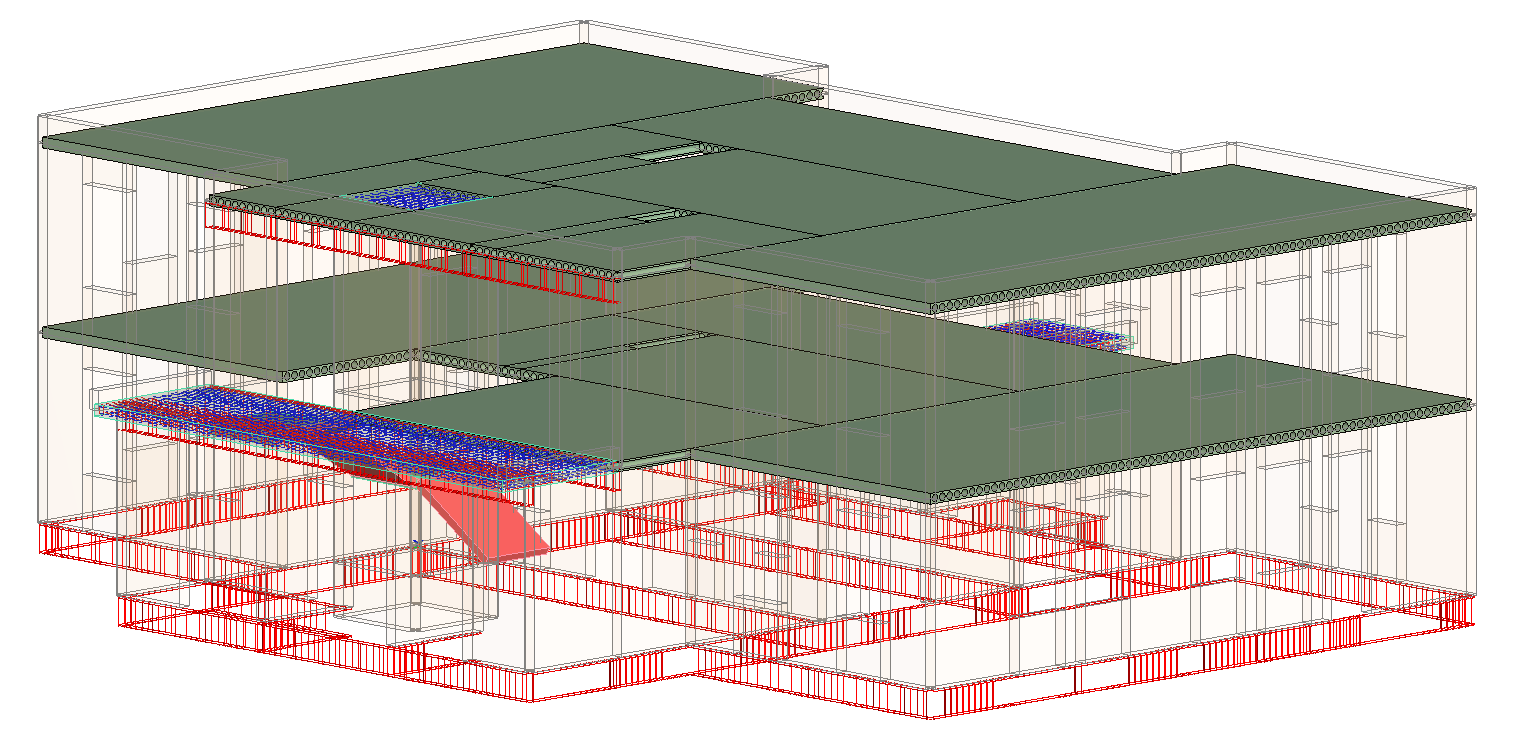
For structural analysis, AXISVM combines fast linear static calculations with advanced nonlinear analysis. The nonlinear capabilities were especially important for reinforced concrete elements, allowing engineers to account for:
- Actual reinforcement layouts
- Shrinkage and creep effects
- Nonlinear material behaviour
- Geometric nonlinearity of both 1D and 2D elements
These analyses resulted in significantly more accurate predictions of structural deflections and cracking behaviour.
The software also provided comprehensive tools for evaluating support reactions, displacements, and internal forces, enabling a detailed understanding of the building’s structural performance.
Integrated design modules for reinforced concrete slabs and beams, steel members, and masonry walls allowed the entire structural design process to be completed within a single software environment.
A Fully Integrated Structural Engineering Workflow
According to UAB Structures, every core functionality of AXISVM played an important role in the successful completion of the project.
The ability to carry out geometry creation, material definition, load modelling, finite element analysis, and structural design within one integrated platform greatly simplified the engineering workflow. This reduced the need for external software while making iterative updates and multi-stage verification considerably more efficient.
For reconstruction projects such as the Vilnius “Vilties” School, where engineers frequently revisit and refine structural solutions, this integrated approach ensured consistency, reliability, and significant time savings throughout the design process.
Why UAB Structures Recommends AXISVM
Based on their experience, UAB Structures considers AXISVM an excellent solution for reconstruction and building design projects thanks to its flexibility, intuitive engineer-oriented interface, and efficient workflow.
The software enables rapid load application, quick model modifications, and precise structural analysis, making it particularly well suited for projects requiring frequent design iterations.
Its modular architecture further expands its capabilities beyond reinforced concrete and steel design, with dedicated modules for timber structures, stability analysis, seismic design, masonry, wind load generation, dynamic analysis, construction stages, soil-structure interaction, and many other engineering applications.
By combining all these capabilities within a single environment, AXISVM provides structural engineers with a reliable, efficient, and standards-compliant platform for both everyday engineering practice and complex reconstruction projects.